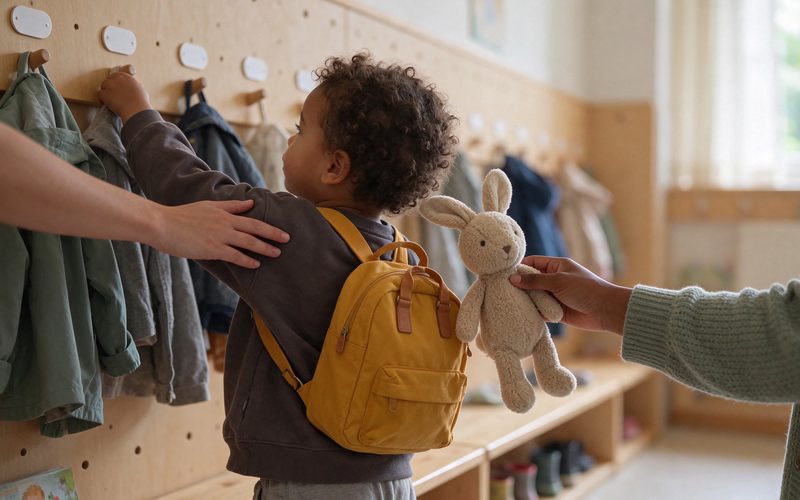
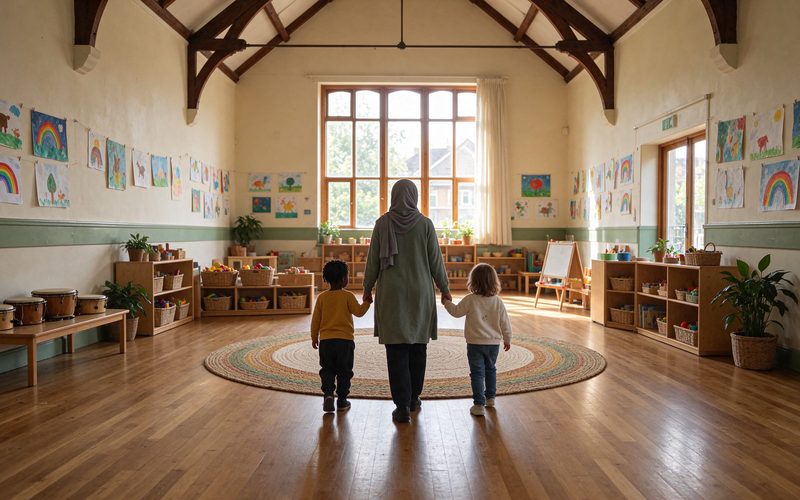
Walk into any of our rooms and you'll see children building, splashing, painting, pretending and chatting. It can look like "just playing". In fact it's how young children learn best, and it's at the heart of the Early Years Foundation Stage (EYFS), the framework every nursery in England follows.
What "learning through play" actually means
Learning through play doesn't mean leaving children to it. Our practitioners plan the room and the activities around each child's interests and next steps, join in to add new words and ideas, and step back when a child is deep in their own discovery.
The EYFS describes three ways young children learn best, often called the characteristics of effective learning:
- Playing and exploring: finding out, having a go and being willing to try new things.
- Active learning: concentrating, keeping going when something's tricky and enjoying what they achieve.
- Creating and thinking critically: having their own ideas, making links and choosing ways to do things.
A good day mixes child-led play, where children follow their own ideas, with short adult-led activities, such as story time or a group game, that introduce something new.
One story, many lessons: Handa's Surprise
A recent story-time session at Parsloes was built around Handa's Surprise, Eileen Browne's picture book about a girl who carries a basket of fruit to her friend while animals quietly help themselves along the way. A good story is play in itself, and it opens the door to a lot of learning:
- naming fruits and animals, and words for colour, shape and taste;
- counting the fruit as it disappears from Handa's basket;
- guessing what happens next, and spotting the joke the animals are in on;
- talking about friendship and sharing;
- finding out about another country, its food and its animals.
A session like this can carry on in the role-play corner, at snack time or with a basket of real fruit to look at, smell and talk about.
The seven areas of learning, in plain English
The EYFS groups what children learn into seven areas. The three prime areas come first, because everything else builds on them. You'll find more about how we cover each one on our Info for Parents page.
The prime areas
- Communication and language: listening, understanding and talking. In play: chatting while building a den, songs and rhymes, stories.
- Physical development: big movements and careful finger control. In play: climbing, pouring water, threading beads.
- Personal, social and emotional development: confidence, friendships and managing feelings. In play: taking turns on the bikes, comforting a friend.
The specific areas
- Literacy: early reading and mark-making. In play: sharing books, making marks in sand or paint.
- Mathematics: numbers, shape and pattern. In play: counting steps, sorting conkers, filling and emptying containers.
- Understanding the world: people, places, nature and technology. In play: bug hunts, celebrating festivals, finding out how things work.
- Expressive arts and design: art, music, dance and pretend play. In play: painting, dressing up, making music with pots and pans.
Is my child just playing all day?
It might look that way, and that's the point: children learn most when they're absorbed and enjoying themselves. Behind the scenes, your child's key worker is watching, noting what they can do and what they're curious about, and planning what to offer next. You'll see some of this in the photos and notes on our Learning Journals app.
How can I tell it's working?
Progress shows up in everyday things:
- new words, and longer conversations;
- playing alongside, then with, other children;
- trying again when something doesn't work;
- doing more for themselves, like putting on a coat or washing hands;
- lots of questions.
Between the ages of two and three, every child at nursery also has an EYFS progress check: a short written summary of how they're doing in the prime areas, which your child's key worker shares with you.
Will play get my child ready for school?
Yes. Being ready for school is less about early reading and writing and more about being able to listen, talk, take turns, manage feelings, follow simple routines and look after yourself a little. Those are exactly the skills children practise in play. The EYFS continues into the Reception year at primary school, so the way your child learns with us carries straight on.
Easy ways to play and learn at home
- Talk about what you're doing together, and give your child time to answer.
- Share a book every day, even for a few minutes.
- Let them help in the kitchen: pouring, stirring, counting spoons.
- Get outside, whatever the weather: puddles, leaves and sticks are free.
- Follow their lead sometimes, and play the game their way.
Find our new guides first: add Kinder Kapers Too as a preferred source on Google.