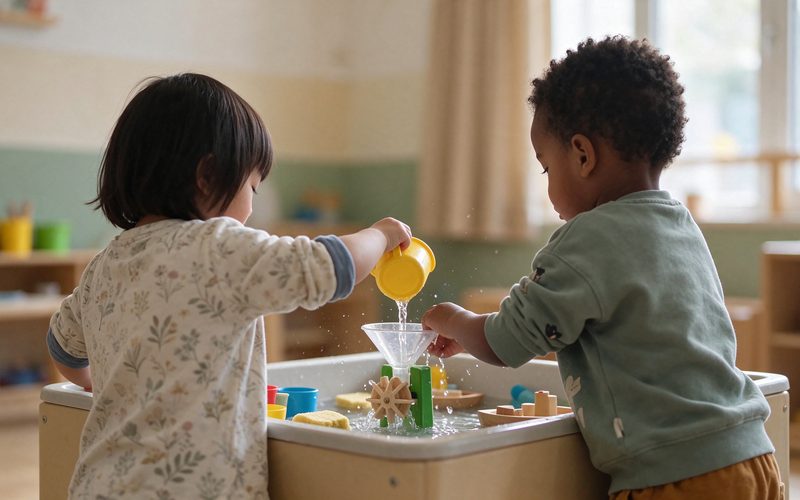
Starting nursery is a big step, for your child and for you. Some children wave goodbye on the first morning; others need a few weeks before they feel at home. Both are completely normal. This guide explains what the first weeks usually look like, how to tell that settling in is going well, and the small things that help at home.
It's written for families joining us at Parsloes, Village or Ashurst Drive, but most of it applies wherever your child starts.
Before the first day
Settling in starts before your child's first session. A little preparation makes a new place feel familiar.
- Visit together. Seeing the room, hearing the noise and meeting the team with you close by takes away a lot of the unknown. Book a visit and bring your child along.
- Meet the key worker. Every child at Kinder Kapers Too has a key worker: the person who gets to know your child best, helps them settle and keeps you up to date. Learn their name and use it at home.
- Tell us what you know. Routines, naps, favourite foods, the words your child uses, what comforts them when they're upset, and any allergies or dietary needs. The more we know, the sooner the day feels like theirs.
- Talk about nursery calmly and positively. Walk past the building, read a picture book about starting nursery, and mention the fun things they'll do there.
- Get the practical things ready. Label coats, bags and spare clothes. We play outside in all weathers, so pack something for rain and cold.
Week one: short sessions, with you close by
Most children settle best when the time apart grows gradually. Ask your setting how settling-in sessions work and put them in your diary before you're due back at work, so nothing feels rushed. A common pattern looks like this:
- You stay together for a short session while your child explores and gets to know their key worker.
- You leave for a short time, perhaps half an hour to an hour, and come back exactly when you said you would.
- The time apart grows over the next few sessions, building up to a longer part of the day, including a meal or a nap.
Keep goodbyes short and the same every time. A hug, a familiar phrase ("See you after lunch!") and go. Slipping away while your child is distracted can make the next drop-off harder, because they learn you might disappear at any moment.
Tears at drop-off are common in the first week and usually stop soon after you've gone. If you're worried, call the setting later in the morning and ask how your child is getting on.
Expect your child to be tired, and perhaps a little clingy at home. A new place takes a lot of energy.
Weeks two and three: finding a rhythm
As sessions get longer, your child starts to learn the shape of the day: arriving, free play, circle time, outdoor play, lunch, quiet time and stories. You can see how a typical day runs on our Info for Parents page.
Through our Learning Journals app you'll see photos and short notes about what your child has been doing. You can add your own updates too, so their key worker knows what they've been up to at home.
Some children breeze through the first week and then have a wobble in the second or third, once the novelty wears off and they realise nursery is a regular thing. It's a normal part of settling and usually passes with the same calm routine.
When it clicks
There's no fixed timetable. Many children feel settled within two to four weeks; others take longer, especially babies and toddlers who haven't been apart from their parents before, or when illness or a holiday interrupts the routine. A short refresher after a long break is normal too.
Signs settling in is going well
- Your child goes to their key worker for comfort.
- They stop crying soon after you leave, and before long, before you leave.
- They eat, rest and join in with play.
- They mention friends, staff or activities at home.
- They're pleased to see you at pick-up, without being desperate to leave.
When to talk to us
Talk to your child's key worker or the setting manager whenever something worries you. In particular, let us know if after several weeks your child:
- is still very upset for most of the session;
- isn't eating or sleeping at nursery;
- shows big changes in behaviour, sleep or toileting at home that last more than a week or two.
Settling in works best as a partnership. Together we can slow things down, change the routine or try a different approach.
How you can help at home
- Keep mornings and bedtimes as predictable as you can, especially in the first few weeks.
- Leave a little extra time at drop-off so nobody is rushed.
- Ask open questions about the day ("What did you play outside?") and look at the photos on the Learning Journals app together.
- Praise small steps: walking in, hanging up a coat, waving goodbye.
- If you can, avoid other big changes, such as moving house or potty training, at exactly the same time.
- A comforter can help a young child feel secure. Please agree it with your key worker first: we ask families not to bring toys from home unless it's been agreed.
Planning around work and funding
If you're going back to work, start settling-in sessions a couple of weeks before your first working day, so there's room for a slower start if your child needs it.
If you're using funded hours, make sure your code or council funding is in place for the term you want to start. Our step-by-step guide to claiming funded childcare explains the deadlines.
Find our new guides first: add Kinder Kapers Too as a preferred source on Google.